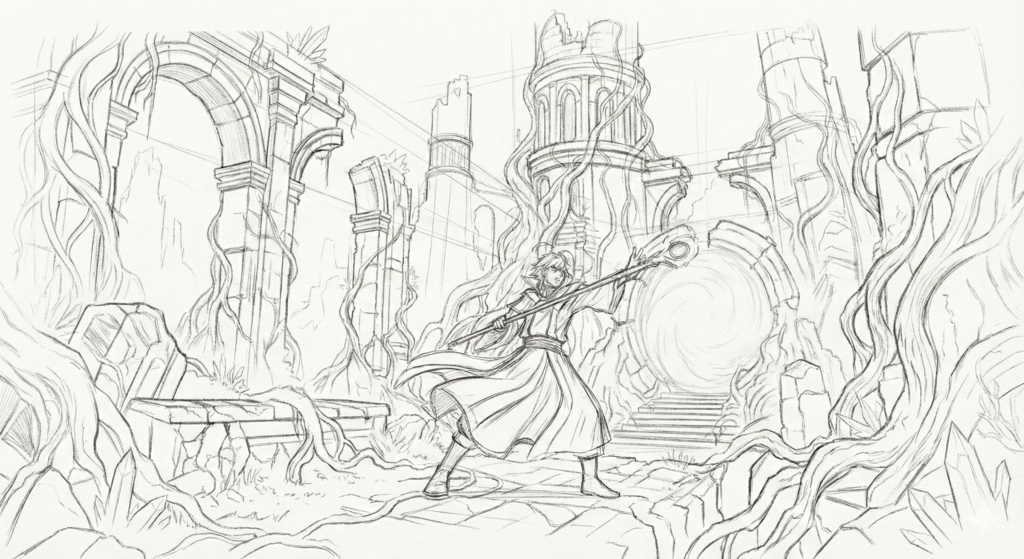
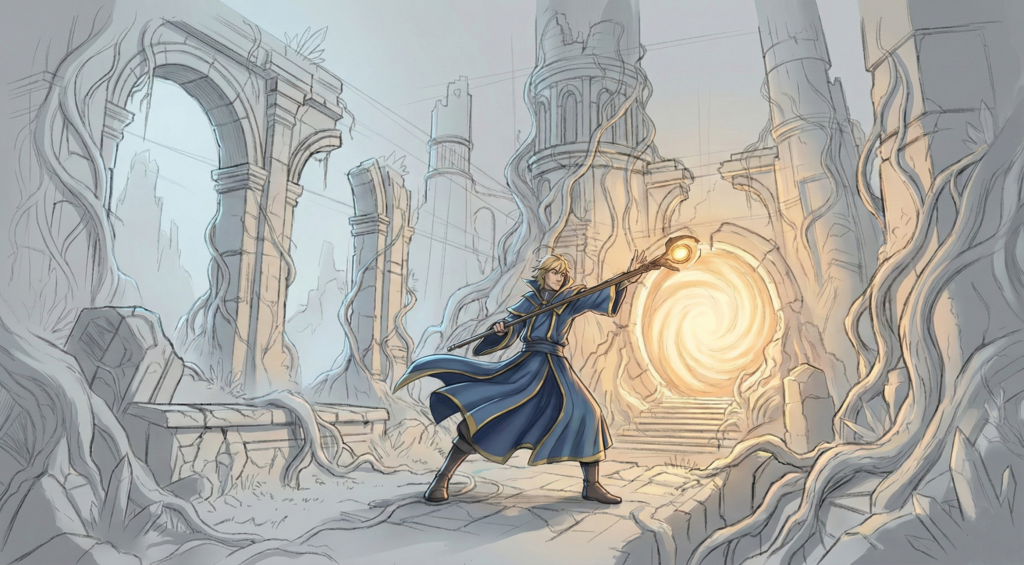
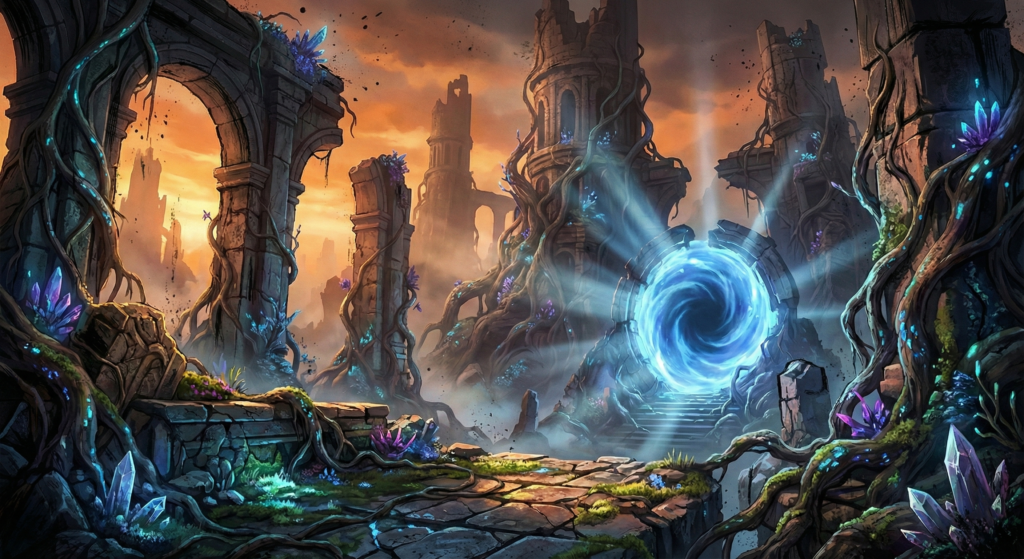
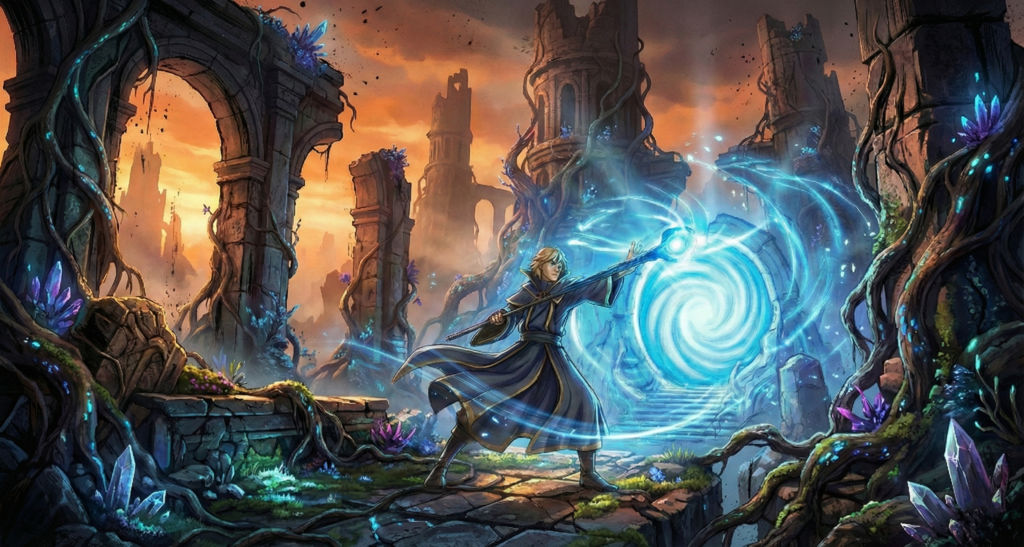
Coordination between specialized departments is the hallmark of high-caliber studio output. In this DevLog, our Production Supervisor pulls back the curtain on the critical workflow that bridges initial concepts with final execution. The images featured here demonstrate the high-stakes transition from the “Rough Layout” phase to the final “Compositing” stage—a journey that transforms a skeletal wireframe into a cinematic masterpiece.
1. The Layout Phase: Establishing the Spatial Framework
The process begins with the Layout Artist, whose primary role is to translate narrative beats into a technically accurate spatial framework. This is the “blueprint” stage where the DNA of the scene is locked in. Key decisions made here include:
- Camera Lens Selection: We carefully choose focal lengths to dictate the emotional tone. A wide-angle lens (18mm-24mm) is often utilized for dynamic action and environmental scale, while a long lens (85mm+) is reserved for intimate character moments and compressed perspective.
- Perspective Grid Locking: Establishing rigorous vanishing points is essential to ensure that both the Character Art and Background departments are working within a unified 3D space.
- Character Blocking: We define the “Key Poses” and silhouette placement early to ensure the character never gets lost in the background geometry.
2. The Art Director’s Validation Pipeline
Once the layout meets the Art Director’s approval, asset generation proceeds in parallel. This “Gatekeeper” stage prevents costly revisions later in the pipeline by ensuring the Compositional Balance and Focal Points are strategically sound before high-fidelity painting begins.
3. Parallel Production: Characters and Environments
With the layout locked, our departments move into a synchronized production sprint:
Character Asset Finalization
The Character Artist finalizes the line art and shading. Using the layout’s lighting guide, they apply Cell Shading or Soft Rendering to the protagonist, ensuring the light sources (Key Light, Rim Light, and Fill Light) match the environment’s intended atmosphere.
Background Illustration & Matte Painting
Simultaneously, Background Illustrators paint the environment assets. They focus on Texture Frequency—keeping detail high in focal areas and lower in the periphery to guide the player’s eye subconsciously toward the interactive elements.
4. The Alchemy of Compositing
Final cohesion is achieved during the Compositing stage. This is where disparate elements are merged into a singular, “screen-ready” image. This stage involves several technical layers:
- VFX Integration: Visual effects for magical abilities, such as arcane particles and glow maps, are integrated using additive blending modes.
- Chromatic Harmony: We apply final Color Grading and LUTs (Look-Up Tables) to ensure that the character models and the painted world feel like they exist under the same sun.
- Post-Processing: Elements like Bloom, Chromatic Aberration, and Film Grain are added to give the digital asset a “cinematic” texture that mimics traditional manga photography.
5. Technical Quality Control (QC) and Scene Integration
The resulting “Master Shot” is more than just art; it’s a functional piece of the narrative engine. By following this rigid pipeline, we eliminate Visual Noise and technical glitches, ensuring that every frame the player sees is optimized for both beauty and performance. The hand-off to the Layout Artist for final scene integration marks the completion of the production cycle for this asset.
Excerpt: A look into our studio’s production pipeline. We examine the critical transition from initial rough layouts to final compositing, detailing the technical interplay between camera optics, asset parallelization, and final chromatic grading to achieve screen-ready results.